


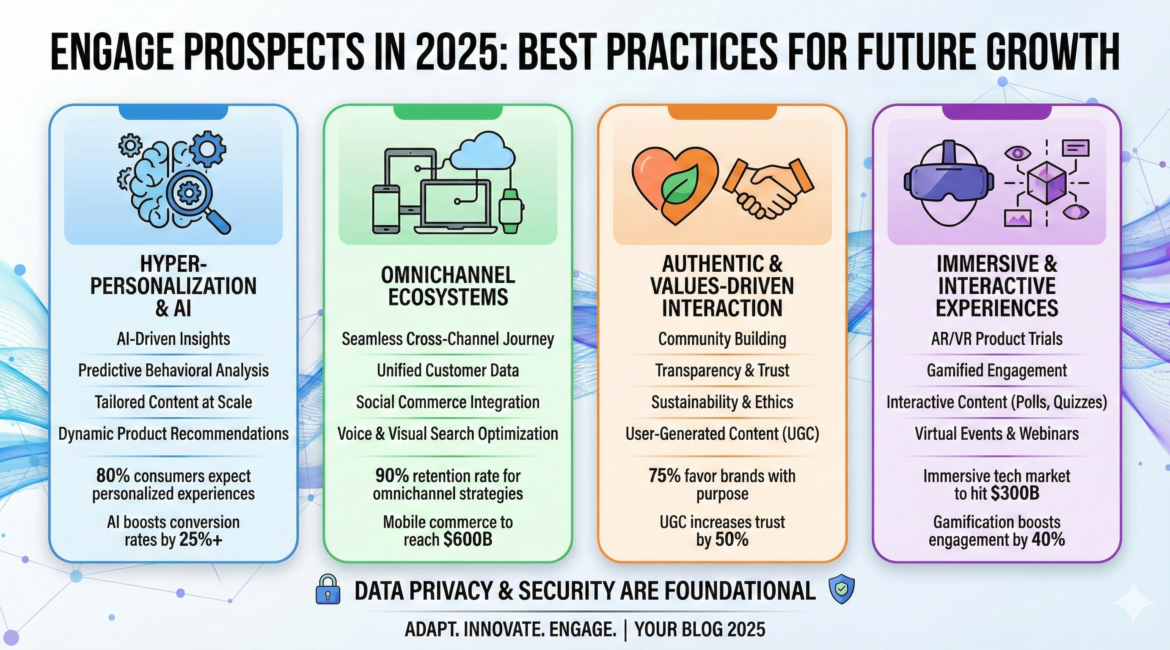
How to engage prospects
In the ever-evolving landscape of sales and marketing, engaging prospects effectively has become a non‑negotiable pillar of business success in 2025. Buyers are better informed, more distracted, and more selective than ever. They research extensively before speaking to sales, compare multiple vendors in parallel, and expect a consumer‑grade experience even in B2B.
As a result, traditional “spray and pray” tactics—mass emailing, generic cold calling, and one‑size‑fits‑all sequences—continue to lose impact. They don’t just underperform; they actively damage brand perception. To cut through the noise, organizations must embrace innovative, personalized, and multi‑channel strategies grounded in empathy, data, and clear value.
Modern prospects expect tailored interactions that speak directly to their unique challenges, priorities, and goals. According to SuperAGI, 75% of customers now prefer personalized sales experiences, making it essential for sales and marketing teams to move beyond surface‑level personalization (like using first names) toward contextual, insight‑driven outreach.
At the same time, the tools available to sales organizations have never been more powerful. AI‑driven platforms, enriched CRM systems, and advanced analytics allow teams to:
- Identify high‑intent prospects earlier
- Understand behavior across channels
- Deliver the right message at the right moment
Meanwhile, social selling has shifted from a “nice‑to‑have” to a core discipline. LinkedIn reports that 78% of social sellers outperform peers who do not leverage social media. Effective social selling goes far beyond blasting connection requests. It’s about consistently showing up where your buyers are—commenting thoughtfully on their posts, sharing insights that help them do their jobs, and building familiarity before any formal sales outreach.
Layered on top of this is the importance of multi‑touch, multi‑channel engagement. As SMARTe notes, orchestrating a combination of email, LinkedIn messaging, phone calls, social content, and personalized video significantly increases your odds of getting noticed and building trust. Prospects are busy; they rarely respond to a single touch. They respond to coherent, persistent, and relevant contact over time.
Underpinning all of this is a deeper understanding of buyer psychology. As Tech Sales Temple highlights, today’s buyers make decisions through a blend of rational and emotional drivers—cost, quality, risk mitigation, social proof, urgency, and personal career upside all play a role. Outreach that ignores these drivers feels flat. Outreach that aligns with them feels obvious and compelling.
In this blog, we’ll explore the most effective practices for engaging prospects in 2025, focusing on:
- Personalization and building genuine relationships
- Leveraging technology and tools for modern prospecting
- Multi‑channel and multi‑touch engagement strategies
- Key takeaways and actionable next steps for sales organizations
Personalization and Building Genuine Relationships
Leveraging Empathy for Authentic Engagement
Personalization in 2025 is not just about inserting a name into an email subject line or referencing a company’s industry. It’s about understanding the human being behind the job title—their pressures, ambitions, fears, and constraints—and reflecting that understanding in your outreach.
A Forbes report notes that:
- 73% of customers expect better personalization as technology advances
- Yet 61% feel brands still treat them impersonally
This disconnect highlights a critical opportunity. Too many organizations have the data to personalize, but not the mindset. They optimize for volume and speed instead of relevance and resonance.
Empathy bridges this gap. It turns data points into meaningful context.
Practical ways to apply empathy in outreach:
- Shift from pitching to exploring.
Instead of opening with “Here’s what we do,” ask thoughtful, open‑ended questions like:
“How are you currently handling X?”
“What’s been most challenging about Y this quarter?”
Then listen and reflect those answers back in your follow‑up. - Acknowledge real‑world constraints.
Show that you understand prospects’ reality: budget freezes, over‑committed teams, competing projects, and risk aversion. A simple line like, “Given how tight Q4 budgets can be…” goes a long way toward sounding human. - Mirror the prospect’s language.
Pay attention to the words they use in LinkedIn posts, job descriptions, or company messaging. If they talk about “member success,” don’t talk about “customer satisfaction.” This subtle mirroring signals alignment. - Avoid robotic or overly formal tone.
Prospects are people, not decision‑making machines. Warm, conversational language generally outperforms stiff, template‑like copy—especially in early touches.
Empathy doesn’t mean losing rigor or professionalism. It means acknowledging the emotional side of buying and tailoring communication accordingly.
Behavioral Data as the Foundation of Personalization
While empathy defines how you speak to prospects, behavioral data reveals what they care about and when they care about it. Demographics and firmographics—role, company size, industry—are useful, but they rarely tell the full story.
Behavioral data answers questions like:
- What pages is this prospect visiting on your site?
- Which emails do they open and click?
- Are they engaging more with product‑focused or thought‑leadership content?
- Have they attended webinars, downloaded guides, or viewed pricing?
A McKinsey study cited in Amplitude’s blog found that:
- 71% of consumers expect personalized interactions
- 76% feel frustrated when those expectations are not met
This frustration often shows up as unsubscribes, deleted emails, or—worse—negative word of mouth.
Key strategies to leverage behavioral data effectively:
- Map the customer journey in detail.
Identify the micro‑moments that indicate rising interest: repeated visits to the same solution page, returning to pricing, or watching a full demo video. These milestones should trigger specific, context‑aware touches. - Use predictive analytics and scoring.
Configure your CRM or AI tools to score leads not just by who they are, but by what they do over time. A VP who never opens your emails might be “colder” than a manager who has visited your pricing page three times this week. - Segment based on engagement patterns.
Separate prospects who are highly engaged from those who are passive. Tailor cadence, messaging, and channel mix accordingly. High‑intent prospects might get shorter, direct sequences; colder ones may need more educational content. - Continuously test and improve.
Personalization is not a one‑time setup. Use A/B testing to refine subject lines, CTAs, send times, and content types. Let the data tell you what works for each segment—then update your playbooks.
Behavioral data is powerful, but only if it’s translated into clear rules and operational changes. Otherwise, it sits idle in your CRM and analytics dashboards.
Dynamic Content Personalization Across Channels
Dynamic personalization means adapting what a prospect sees—on your website, in your emails, in your ads, and even in your product interface—based on real‑time signals. It’s the difference between:
“Here’s our generic solution overview”
and
“Here’s how teams like yours in [industry] use our platform to solve [specific problem].”
IBM’s research on hyper‑personalization emphasizes that dynamic experiences use AI and machine learning to process signals like:
- Browsing activity
- Location and time zone
- Device type (mobile vs. desktop)
- Role‑specific interests
- Past campaign engagement
Examples of dynamic personalization in action:
- Personalized video outreach.
Instead of sending a static PDF, record a short video addressing the prospect by name, referencing their company and a specific challenge. Altitude Marketing notes that such videos dramatically increase reply rates because they feel bespoke and effortful. - Adaptive web experiences.
Show different hero messages, case studies, or CTAs based on industry or account segment. A SaaS buyer in healthcare should see different proof points than one in e‑commerce. - Geo‑targeted offers.
Adjust examples, testimonials, or offers based on local regulations, seasonal trends, or region‑specific pain points. For instance, highlight local customers or relevant compliance certifications. - Omnichannel context continuity.
If a prospect clicks a specific feature page from an email, ensure retargeting ads and follow‑up emails reinforce that same theme—rather than resetting them to a generic pitch.
The more consistent and context‑aware your content feels, the more it mimics a thoughtful human conversation.
Building Trust Through Transparent Data Practices
Hyper‑personalization depends heavily on data. The line between “impressively relevant” and “creepy” can be thin. To stay on the right side of that line, transparency is critical.
Customers are increasingly aware of data privacy issues. Regulations like GDPR and CCPA, and high‑profile breaches, have made them cautious about how their information is used.
IBM reports that customers are more likely to share data when:
- They understand how it will be used
- They believe it will improve their experience
- They trust that it will be protected and not sold indiscriminately
Best practices for trustworthy data usage:
- Explain data collection in plain language.
Avoid legalese. Clearly state what you’re collecting (e.g., browsing history, email engagement) and why (e.g., to send more relevant content, avoid redundant outreach). - Offer meaningful control.
Provide easy opt‑in and opt‑out mechanisms—not buried links. Honor unsubscribe and preference changes immediately, not weeks later. - Highlight your security practices.
Even a brief note about encryption, third‑party audits, or compliance certifications can reassure cautious buyers, especially in regulated industries. - Use personalization sparingly and thoughtfully.
Just because you can reference a very specific behavior doesn’t mean you always should. For instance, “I noticed you visited our pricing page three times yesterday” can feel intrusive. Instead, you might say, “If you’re in the process of evaluating pricing options, here’s a breakdown that might help.”
Transparency and restraint build trust, which is the real foundation of long‑term customer relationships.
Emotional Storytelling to Strengthen Connections
Humans remember stories, not feature lists. Storytelling helps prospects visualize the journey from their current “stuck” state to a better future with your solution.
Revnew emphasizes that when you construct a storyline that prospects can see themselves in, you turn a transactional interaction into an inspiring, aspirational experience.
Effective storytelling techniques for prospecting:
- Use “before and after” narratives.
Describe a customer who started in a familiar state: overwhelmed, under‑resourced, facing stalled growth or rising costs. Then show, concretely, how life changed after adopting your solution. - Include conflict and stakes.
The most engaging stories have tension. What was at risk if the problem hadn’t been solved? Missed targets? Burnout? Customer churn? Regulatory exposure? - Tailor by persona and industry.
A CFO cares about ROI, risk mitigation, and predictability. A VP of Marketing cares about pipeline, brand visibility, and campaign efficiency. Shape your stories accordingly. - Incorporate sensory and vivid language—but stay grounded.
Avoid dry, jargon‑heavy copy. Use clear, relatable phrases like, “Instead of spending nights wrestling with spreadsheets…” or, “Within three months, their reps were walking into meetings with a complete view of every stakeholder.” - Use numbers and specifics.
“We helped them increase revenue” is forgettable. “We helped a 200‑person SaaS company cut their average sales cycle from 90 to 60 days” is concrete and credible.
Stories work particularly well in mid‑funnel content—case studies, webinars, and follow‑up emails after discovery calls—but they also belong in top‑funnel outreach when done succinctly.
By layering empathy, behavioral data, dynamic content, transparent data usage, and storytelling, businesses move beyond superficial personalization to create genuine, durable relationships with prospects.
Leveraging Technology and Tools for Prospecting
Technology, when used thoughtfully, is a powerful amplifier of human skill. It can’t replace curiosity, empathy, or strategic thinking—but it can dramatically expand their reach.
In 2025, the highest‑performing sales teams treat technology not as a shiny object, but as a system that:
- Centralizes data
- Automates low‑value tasks
- Surfaces insights at the right time
- Guides consistent, repeatable workflows
Advanced AI‑Driven Prospecting Tools
AI‑driven prospecting platforms have gone from experimental to mainstream. They help teams identify and prioritize leads, personalize outreach, and time their contact with remarkable precision.
Tools like Clearbit analyze firmographic and behavioral data to surface high‑fit, high‑intent accounts (SuperAGI). Others, like Valley (Join Valley), generate tailored messaging variants aligned with a prospect’s role, company, and recent activity.
Key capabilities of AI‑driven prospecting tools:
- Predictive Lead Scoring
AI models ingest multiple inputs—job seniority, company size, website behavior, content engagement, tech stack signals—and generate dynamic scores that update as behavior changes. Reps can focus on the top tier rather than manually sifting through lists. - Hyper‑Personalization at Scale
AI‑assisted writing tools can craft bespoke email intros and LinkedIn messages referencing a prospect’s recent post, event attendance, or company announcement. Instead of generic templates, you get hundreds of “first drafts” that feel researched. - Intent Signal Analysis
By tracking signals like repeated visits to pricing pages, competitive comparison content, or late‑stage resources (e.g., ROI calculators), AI can alert reps to reach out when interest is highest.
Organizations using AI‑powered tools report:
- 25% increase in lead generation
- 15% boost in conversion rates (SuperAGI)
The crucial point: AI should augment, not replace, human judgment. The best reps use AI insights as conversation starters, not scripts to follow blindly.
Sales Automation Platforms for Workflow Optimization
Sales automation platforms reduce manual toil so reps can do what only humans can do: run nuanced discovery, handle objections, and build trust.
These platforms typically integrate with CRM systems and coordinate outreach across email, phone, SMS, and social.
Core capabilities of sales automation platforms:
- Automated Lead Generation & Enrichment
Tools like Skrapp source and enrich contacts with job titles, industries, company size, and verified email addresses (Skrapp). This reduces hours of manual research and keeps databases cleaner. - Streamlined Outreach Campaigns
Reps can enroll prospects into sequenced campaigns with pre‑built templates that adapt dynamically based on role, segment, or persona. Platforms schedule sends for optimal times and automatically pause sequences when a reply comes in (Superhuman Prospecting). - Follow‑Up and Task Management
Once a prospect engages, automation tools create tasks for reps, set reminders, and ensure no lead “falls through the cracks.” They can also trigger workflows: for example, moving a contact to a new cadence after a demo is booked.
Teams that effectively implement sales automation often report:
- A significant reduction in admin time
- Over 30% of sales time reclaimed for discovery, demos, and relationship‑building (Superhuman Prospecting)
The danger is over‑automation: blasting too many templated messages or failing to personalize beyond tokens. The most effective teams build guardrails and coach reps on when to intervene manually.
CRM Systems as Centralized Prospecting Hubs
Your CRM should be the single source of truth for customer and prospect data—not a static database that reps reluctantly update once a week.
When configured well, a CRM system becomes the central hub for:
- Tracking all prospect interactions
- Coordinating teams (SDRs, AEs, CSMs, marketers)
- Forecasting and pipeline management
Benefits of using a CRM as your prospecting hub:
- Data Organization & Visibility
CRMs store contact details, communication history, meeting notes, deal stages, and tasks in one shared environment (Aspire Marketron). Everyone can see who last spoke to a prospect and what was discussed. - Lead Qualification & Prioritization
Advanced CRMs like Microsoft Dynamics 365 use AI‑driven scoring and rule‑based workflows to categorize and route leads (Gestisoft). High‑priority leads might be flagged for immediate AE outreach; others enter nurture sequences. - Collaboration & Accountability
Shared dashboards show which accounts are being worked, by whom, and with what results. This prevents double‑touching, ensures handoffs are smooth, and makes forecasting more reliable.
Companies adopting robust CRM practices often see:
- 20% increase in sales productivity
- 15% improvement in customer retention (Aspire Marketron)
The key is adoption. A CRM is only as good as the data inside it. Leaders must set expectations, simplify data entry where possible, and demonstrate how CRM data helps reps close more deals.
Real‑Time Sales Intelligence Tools
Sales intelligence tools turn static data into live context about accounts and buyers. Instead of a flat list of contacts, you get a real‑time view of what’s happening in their world.
Key features of sales intelligence tools:
- Dynamic Data Updates
Platforms like LinkedIn Sales Navigator track job changes, new hires, promotions, and company announcements. If your champion moves to a new company, you can quickly re‑engage them in a new buying cycle (Superhuman Prospecting). - Buyer Intent Analysis
Intent data tools monitor content consumption patterns across the web (e.g., visits to review sites, searches for competing tools, topic clusters). They flag accounts that appear to be “in market” for solutions like yours. - Competitive Benchmarking & Market Signals
Sales intelligence can surface competitor penetration in key accounts, recent funding rounds, mergers, or strategic initiatives. This context informs how you position your solution and which angles you prioritize.
Companies using real‑time sales intelligence often experience:
- Up to 40% increase in response rates thanks to timely, relevant outreach (Superhuman Prospecting)
Instead of guessing what’s happening inside an account, reps can tailor their contact to current priorities and events.
Agile Prospecting with Sprint‑Based Approaches
Traditional prospecting often follows a rigid annual or quarterly plan. Campaigns are launched, run for long stretches, and evaluated only at the end. By then, the market may have shifted.
Agile prospecting borrows from agile software development: work in short cycles, gather feedback quickly, and iterate.
Core components of agile prospecting:
- Sprint‑Based Campaigns
Design 2–4 week sprints focused on a specific segment (e.g., “Series B SaaS companies with 50–200 employees”) or a specific problem (e.g., “reducing churn among subscription apps”). Define the message, channels, and success metrics upfront (Richardson). - Rapid Experimentation & Real‑Time Adjustments
Monitor open rates, replies, meeting‑book rates, and call outcomes daily or weekly. If a message isn’t landing, adjust the subject line, angle, or CTA mid‑sprint instead of waiting months. - Cross‑Channel Coordination
Treat email, LinkedIn, phone, webinars, and content as a cohesive campaign, not separate initiatives. For example: run a webinar targeted to your sprint segment and use it as the central CTA for your outreach.
Organizations adopting agile prospecting approaches have reported:
- 25% increase in qualified leads
- 30% reduction in sales cycle length (Richardson)
The real value of agile prospecting lies in building a learning culture: teams document what works, share it, and continuously refine their plays.
Multi‑Channel and Multi‑Touch Engagement Strategies
Understanding Multi‑Channel and Multi‑Touch Synergy
Prospects today are bombarded with messages across email, social media, ads, and messaging apps. Showing up in only one or two of these channels is rarely enough.
- Multi‑channel means using multiple platforms—email, phone, LinkedIn, paid ads, events, SMS, direct mail—to reach prospects where they already spend time.
- Multi‑touch means engaging a prospect through a sequence of interactions over days, weeks, or months.
When these strategies are orchestrated well, each touchpoint reinforces the others. The prospect encounters a consistent narrative: same value proposition, aligned visuals, and coherent next steps, regardless of channel.
When done poorly, prospects experience:
- Conflicting offers
- Redundant or repetitive content
- Inconsistent tone and messaging
The result is confusion and diminished trust.
Coordinating Multi‑Channel Messaging for Consistency
Consistency doesn’t mean identical wording everywhere, but it does mean a unified core message: the same audience, problem, and promised outcome.
If a prospect receives an email about “cutting onboarding time by 30%” and then sees a LinkedIn ad about “boosting marketing ROI,” they might not connect those messages to the same solution.
Improvado notes that consistent branding across channels can increase revenue by 23%. This applies not only to visual branding but also to messaging and positioning.
Tips for consistent multi‑channel messaging:
- Create a central campaign narrative.
Document the core problem, primary benefit, key proof points, and main CTA. Every asset—email, landing page, webinar, ad—should reinforce these. - Maintain a shared messaging guide.
Make sure marketing, SDRs, and AEs use aligned language. Update it as you learn which phrasing resonates most. - Sync offers and timing.
If you’re promoting a limited‑time offer or event, ensure the deadlines match across email, social posts, and landing pages. Avoid the trap of extending offers without updating all channels. - Leverage CRM and automation tools for alignment.
Use your tech stack to track which offers prospects have already seen. Avoid sending conflicting or duplicate promotions that feel sloppy or desperate.
Consistency increases recognition, which is crucial when you’re competing for attention in overloaded inboxes and feeds.
Multi‑Touch as a Trust‑Building Mechanism
It’s rare for a prospect to respond to a single, cold touch—even a good one. Most need multiple exposures to your name, brand, ideas, and value proposition before they feel safe enough to engage.
Paradigm Marketing and Design notes that it can take nine to thirteen touches to make a lasting impression.
Each touchpoint is a chance to:
- Deliver value (not just demands)
- Signal expertise and reliability
- Reduce perceived risk
Examples of thoughtful multi‑touch sequences:
For a LinkedIn‑centric B2B sequence:
- View the prospect’s profile and engage with one or two of their posts.
- Send a non‑salesy connection request referencing something specific in their content or role.
- After they accept, share a short, relevant insight or resource without asking for a meeting.
- A few days later, follow up with a tailored note: “Based on X, I thought you might find Y useful…”
- Only after value has been delivered, suggest a brief call to explore fit.
For an email‑driven sequence:
- Email #1: Share a concise, value‑packed resource (e.g., mini guide, benchmark data, checklist).
- Email #2: Follow up with a related case study or story.
- Phone call: Reference their engagement if possible, or leave a brief voicemail.
- Email #3: Ask a targeted question related to their role and likely goals.
- LinkedIn message: Connect and contextualize your outreach (optional but powerful).
Over time, these touches:
- Build familiarity—your name and company become recognizable.
- Create a sense of reciprocity—you’ve given value before asking for time.
- Lower the emotional and political risk of taking a meeting with you.
The goal is not to “wear prospects down,” but to provide enough context and proof that meeting with you feels like the logical next step.
Hyper‑Personalization in Multi‑Touch Campaigns
Hyper‑personalization combines the full spectrum of data—demographic, firmographic, and behavioral—to tailor each touchpoint as if it were handcrafted.
Leveraging AI for Real‑Time Personalization
AI plays a growing role in adapting outreach in real time:
- Triggering a follow‑up email with specific product recommendations after the prospect watches a certain demo video.
- Sending a reminder before a webinar and a tailored recap afterward, based on which sessions they attended.
- Suggesting the best channel and time to reach each prospect based on historical engagement patterns (Accio).
Instead of static, pre‑planned sequences, you get adaptive journeys that change as prospects interact with your brand.
Dynamic Content Across Touchpoints
Dynamic content engines adjust what each prospect sees:
- Prospects who primarily engage with video get short demos, product walkthroughs, or video testimonials.
- Those who prefer written content receive long‑form guides, reports, or case studies.
- Decision‑makers might see high‑level ROI summaries, while end users get feature deep dives.
Cometly notes that this kind of tailored relevance significantly boosts click‑through and reply rates, and builds a stronger sense that your brand “gets” the buyer.
Data‑Driven Optimization of Multi‑Channel Strategies
Running multi‑channel, multi‑touch campaigns without measurement is like flying blind. You might get some results, but you won’t know why—or how to repeat them.
Attribution Models for Enhanced Insights
Multi‑touch attribution helps you understand which interactions and channels contribute most to conversions. A typical journey might look like:
- Prospect sees a LinkedIn ad but doesn’t click.
- They search your brand on Google and read a blog post.
- They sign up for a webinar.
- They receive a post‑webinar email with a case study.
- They finally book a demo after a follow‑up call.
Attribution models let you:
- See the role each touchpoint played in driving that final action.
- Avoid over‑crediting the “last touch” and under‑crediting top‑ and mid‑funnel efforts.
- Make better budget decisions across channels (Highbrow Agency).
Different models (first‑touch, last‑touch, linear, time‑decay) offer different perspectives. The point isn’t to find the “perfect” one, but to move beyond guesswork.
Continuous Campaign Refinement
Based on attribution and engagement data, you can:
- Double down on high‑performing channels and messages.
If webinar attendees convert at higher rates than ebook downloaders, consider shifting budget toward live events and their follow‑ups. - Retire or rework underperforming assets.
A sequence with low open and reply rates might need a different subject line, angle, or audience. - Test new hypotheses.
Try different hooks, CTAs, or formats (e.g., replacing a long paragraph with a short bulleted list in emails). Run controlled tests and measure the impact (Seven Figure Agency).
Over time, a disciplined, data‑driven approach turns your outbound program into a learning machine that improves with every campaign rather than degrading.
Integrating Offline and Online Channels
Despite the digital dominance, offline channels often stand out precisely because they’re less crowded. When used intelligently, they can make your brand far more memorable.
Bridging the Gap Between Physical and Digital
Offline touchpoints—direct mail, physical gifts, in‑person events, trade shows—work best when integrated with your digital strategy.
Examples:
- Direct Mail + Digital Follow‑Up
Send a physical package (e.g., a book, a tailored report, a small, useful gift) to high‑value accounts. A few days later, follow up with a personalized email or LinkedIn message referencing the package and offering to discuss insights (Ironmark USA). - Events + Nurture Sequences
After meeting a prospect at a trade show or roundtable, enroll them into a dedicated post‑event sequence recapping conversations, sharing slides or recordings, and suggesting next steps. - Account‑Based Marketing (ABM) Plays
For strategic accounts, coordinate direct mail, targeted ads, executive outreach, and custom content (like a “growth blueprint” document) into a cohesive campaign aimed at a defined buying committee.
Utilizing QR Codes and NFC Technology
Technologies like QR codes and NFC make it easy to bridge physical and digital experiences:
- QR codes on printed brochures or mailers that lead to personalized landing pages, videos, or booking links.
- NFC‑enabled business cards or swag items that, when tapped, open tailored resources or meeting schedulers.
These tools reduce friction—prospects don’t have to search or type URLs—and make offline interactions instantly trackable.
Social Commerce and Emerging Platforms
Social platforms are no longer just awareness channels; they’re full‑funnel environments where discovery, evaluation, and purchase all happen.
Harnessing Social Commerce for Seamless Transactions
Social commerce embeds buying experiences directly into platforms like:
- Facebook Shops
- Instagram Shopping
- TikTok Shop
For the right types of products—especially B2C, lower‑ticket, and visually appealing offerings—prospects can:
- Discover your product via organic or paid content
- Explore details and reviews
- Complete the purchase without leaving the app (Accio)
Even for B2B, the principles apply: reduce friction, bring CTAs closer to the content, and make it easy to take the next step from within the platform where attention already lives.
Exploring Emerging Platforms for Niche Audiences
Emerging platforms like Clubhouse and Discord cater to specific communities and communication styles:
- Clubhouse (and similar live‑audio platforms):
Host live Q&A sessions, fireside chats, or panel discussions. This lets prospects hear your expertise and personality in real time, which can build trust faster than static posts. - Discord:
Create dedicated servers for customers or prospects to ask questions, share experiences, and consume educational content. This “always‑on” community format is especially compelling in tech, gaming, and creator economies.
Being an early, thoughtful participant on these platforms can establish your brand as a trusted presence within niche segments.
Voice Search and Conversational Marketing
Voice and conversational interfaces are changing how people seek information and make decisions.
Optimizing for Voice Search
With widespread use of devices like Amazon Echo and Google Home, more users ask questions using natural, conversational language. To be discoverable:
- Optimize content for long‑tail, question‑based queries, such as “What is the best CRM for small B2B SaaS companies?” rather than just “CRM software.”
- Use FAQ pages, clearly structured headings, and concise answers that voice assistants can easily surface.
- Implement schema markup so search engines better understand and present your content (Accio).
This is particularly relevant for top‑funnel discovery and brand awareness.
Conversational Marketing Through Chatbots
Chatbots and conversational interfaces now play a central role in prospect engagement, especially on websites and messaging apps.
Effective chatbots can:
- Greet visitors and answer common questions instantly
- Qualify leads by asking a few targeted questions (e.g., company size, role, goals)
- Offer resources or connect visitors to the right human rep
- Guide prospects to book demos or start trials with minimal friction
PuppyDog and similar platforms highlight that well‑designed bots can significantly reduce response time and increase conversion, especially outside normal business hours.
Importantly, the best conversational experiences:
- Hand off gracefully to humans when queries become complex
- Use a warm, human tone rather than sounding mechanical
- Remember past interactions to avoid repetition
In a world where prospects expect instant responses, conversational marketing can be the difference between capturing and losing interest.
Conclusion: Bringing It All Together
Engaging prospects effectively in 2025 requires blending human‑centric strategies with data‑driven technology. Neither alone is sufficient.
On the human side:
- Empathy and Curiosity
Understand the emotional and psychological drivers behind buying decisions. Take the time to learn your buyers’ pressures, constraints, and aspirations. - Storytelling and Clarity
Use narratives, not just features, to show how you help people move from their current challenges to a better future. Be specific, grounded, and credible. - Consistency and Integrity
Deliver on your promises, respect your prospects’ time, and be honest about fit. Trust is built slowly and lost quickly.
On the technology side:
- AI, Automation, and Intelligence
Use tools to identify high‑intent leads, orchestrate personalized multi‑channel campaigns, and surface timely insights. Let technology handle the repetitive work so humans can focus on conversations that matter. - CRMs and Centralized Data
Treat your CRM as the operational heart of your go‑to‑market engine. Clean, complete, and accessible data is what makes personalization and coordination possible. - Measurement and Iteration
Use attribution and analytics to understand which channels, messages, and sequences drive real outcomes. Experiment, learn, and refine continuously.
Key takeaways:
- Personalization + Empathy
Move beyond superficial personalization. Ground your outreach in genuine understanding of your buyer’s world. - Data & Dynamic Content
Let behavioral and intent data shape content and timing across channels in real time. - Trust & Transparency
Be explicit about how you use data, offer real control, and err on the side of respect. - Technology as an Enabler
Use AI and automation to extend your team’s capabilities, not to replace authentic human interaction. - Multi‑Channel, Multi‑Touch
Orchestrate a series of coherent, value‑driven touchpoints where your prospects already spend time—email, social, events, communities, and beyond. - Experiment & Evolve
Today’s best practice is tomorrow’s baseline. Build a culture of learning, testing, and adapting so your prospecting engine gets smarter every quarter.
Organizations that embrace this blend of empathy and intelligence will not only generate more pipeline—they’ll build durable relationships, become trusted partners, and stand out in an increasingly crowded, skeptical market.

